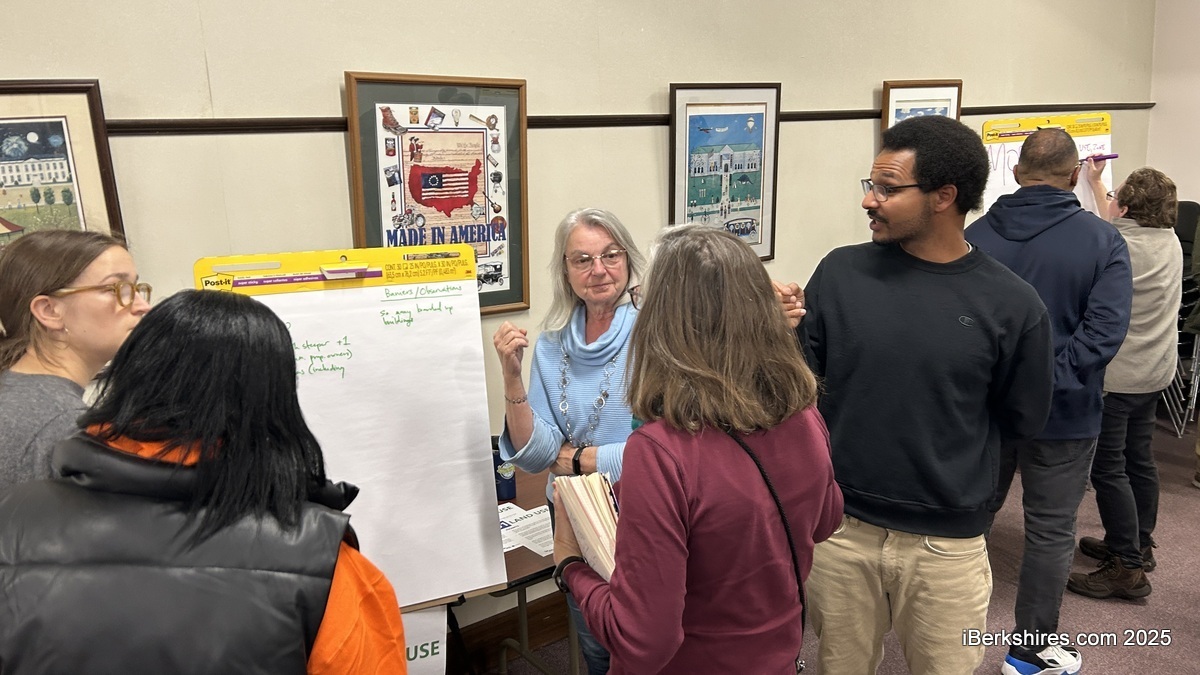
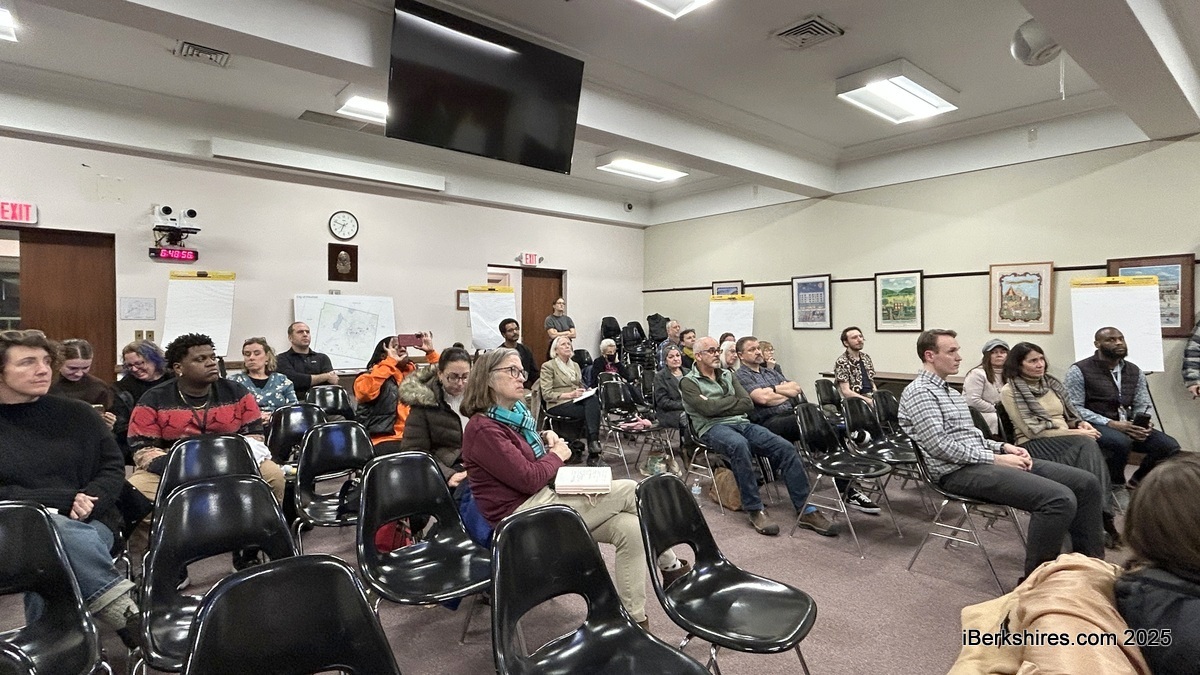
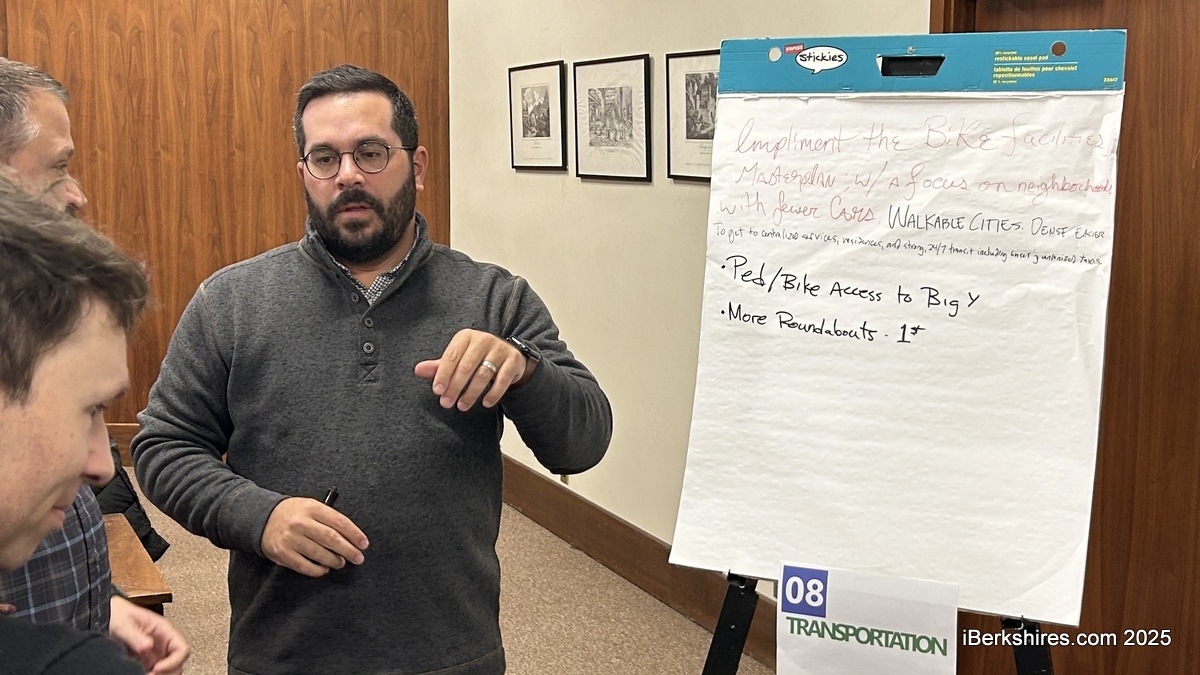
The session had stakeholders writing down the important areas that the plan should address.
PITTSFIELD, Mass. — What should the city look like in the next 15 years?
That is what community members weighed in on during the first master plan workshop, held on Nov. 18 at City Hall.
The Pittsfield Master Plan is the policy guide for physical development, covering land use, infrastructure, sustainability, and more. The plan was last updated in 2009, and Pittsfield has engaged VHB engineering firm for a yearlong process of bringing it to the 2020s and beyond.
Director of Community Development Justine Dodds explained, "It's basically a roadmap for where the city wants to go in the next 15 years."
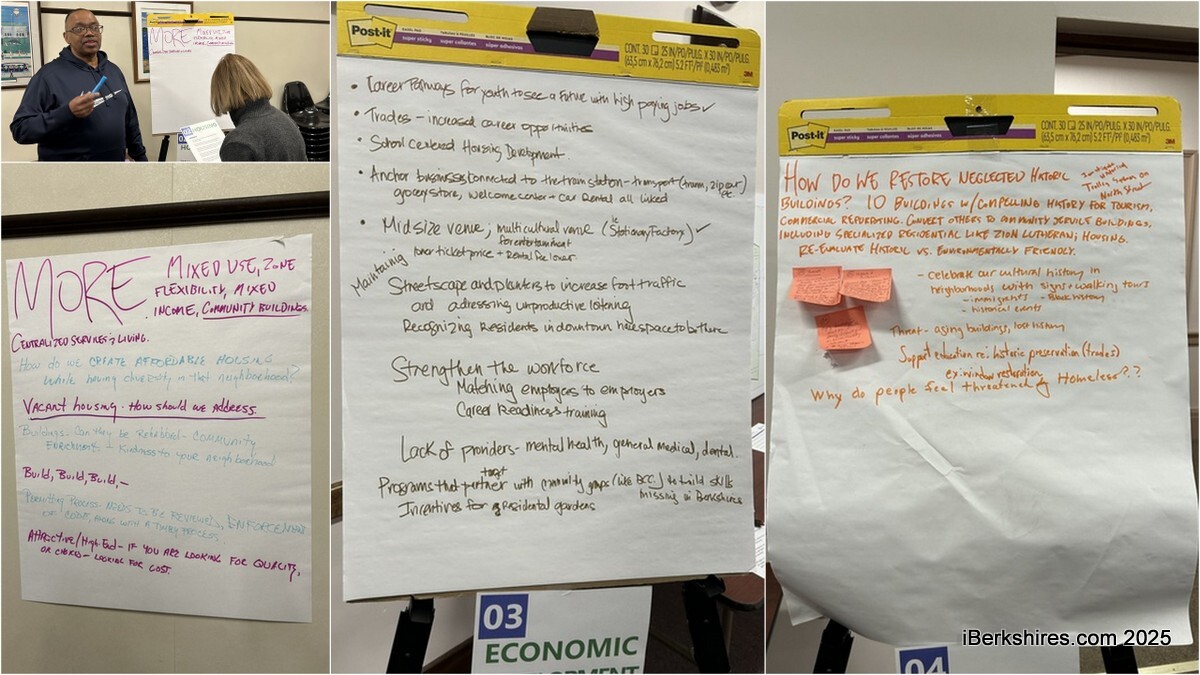
Community members transcribed their visions for Pittsfield on whiteboards corresponding with the eight chapters: land use, housing, economic development, historic and cultural resources, public facilities and services, open space and recreation, sustainability and climate resiliency, and transportation.
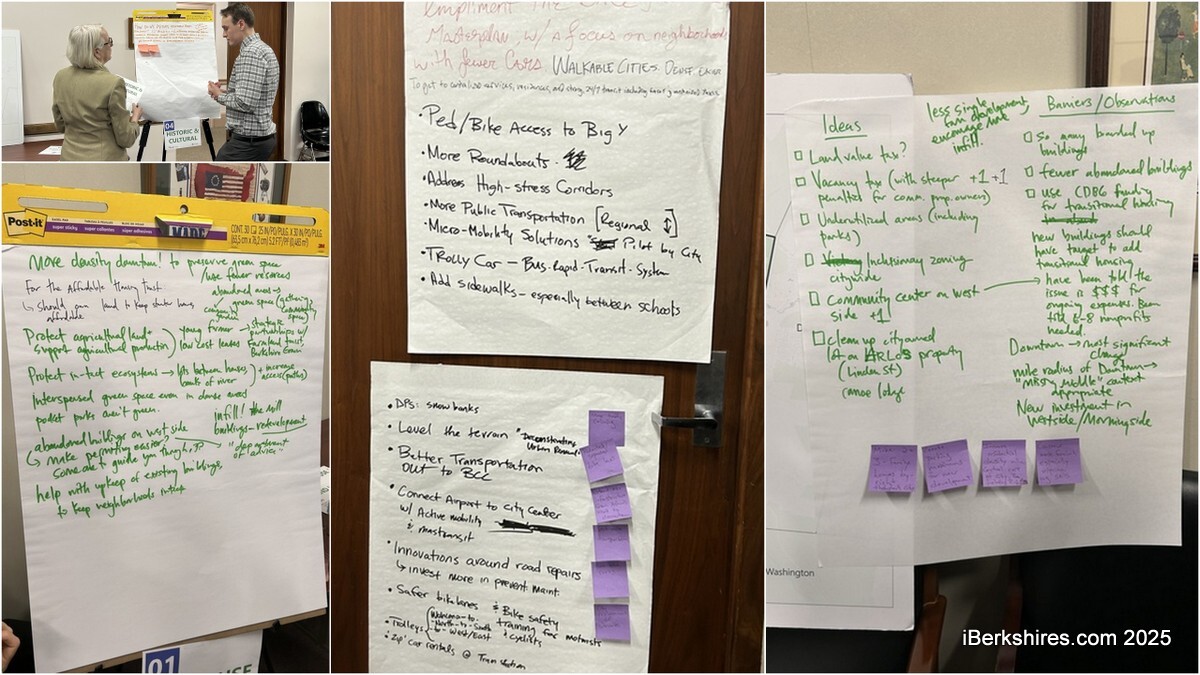
On both housing and land use boards, residents asked that vacant buildings in the West Side and beyond be rehabbed for housing or business.
"Less single [family] development, encourage more infill," the land-use board read.
Similarly, community members asked for more mixed-use and income community buildings and centralized services. "Build, build, build," the housing board read.
People approached Commissioner of Public Works Ricardo Morales with wishes for better pedestrian access, safer bike lanes, more roundabouts, and trolleys, among other requests.
The effort kicked off in August and will culminate in June with a final master plan. It is guided by a Comprehensive Plan Advisory Committee including: Morales, Community Development Board member Elizabeth Herland, Parks Commissioner Simon Muil, City Engineer Tyler Shedd, Chief Diversity Officer Michael Obasohan, Marvin Purry of the Westside Legends, and Rebecca Brien of Downtown Pittsfield Inc.
Community voices will be incorporated through public meetings, comments submitted to the Department of Community Development, and a survey.
"Most cities and towns do a lot of short-term plans, housing plans, open space plans, plans for small districts, changing the zoning of the city. The comprehensive plan is really a chance to take a step back and look at everything in tandem," Luke Mitchell, of VHB, explained.
He continued that a comprehensive plan is not a zoning ordinance, subdivision, regulation, or budget. It will include a baseline conditions assessment, community vision, goals and actions, and a framework for implementation.
"These are all things that might come out of a comprehensive plan, but the comprehensive plan is really sort of higher level. It’s looking at the big picture, and it's based on a vision," Mitchell said.
"Part of the process that we'll be getting to soon is to articulate a vision, a community vision, for Pittsfield. So your input is really going to be helpful tonight in terms of constructing that vision, because the entire comprehensive plan will flow out of that vision."
There will be a couple more workshops, and the next is expected in February or March.
pittsfield.com welcomes critical, respectful dialogue. Name-calling, personal attacks, libel, slander or foul language is not allowed. All comments are reviewed before posting and will be deleted or edited as necessary.
Comments are closed for this blog. If you would like to contribute information on this blog, e-mail us at info@iBerkshires.com