PCTV, Farley-Bouvier Talk Importance of AI AwarenessBy Brittany Polito, iBerkshires Staff
06:13PM / Saturday, February 14, 2026 | |
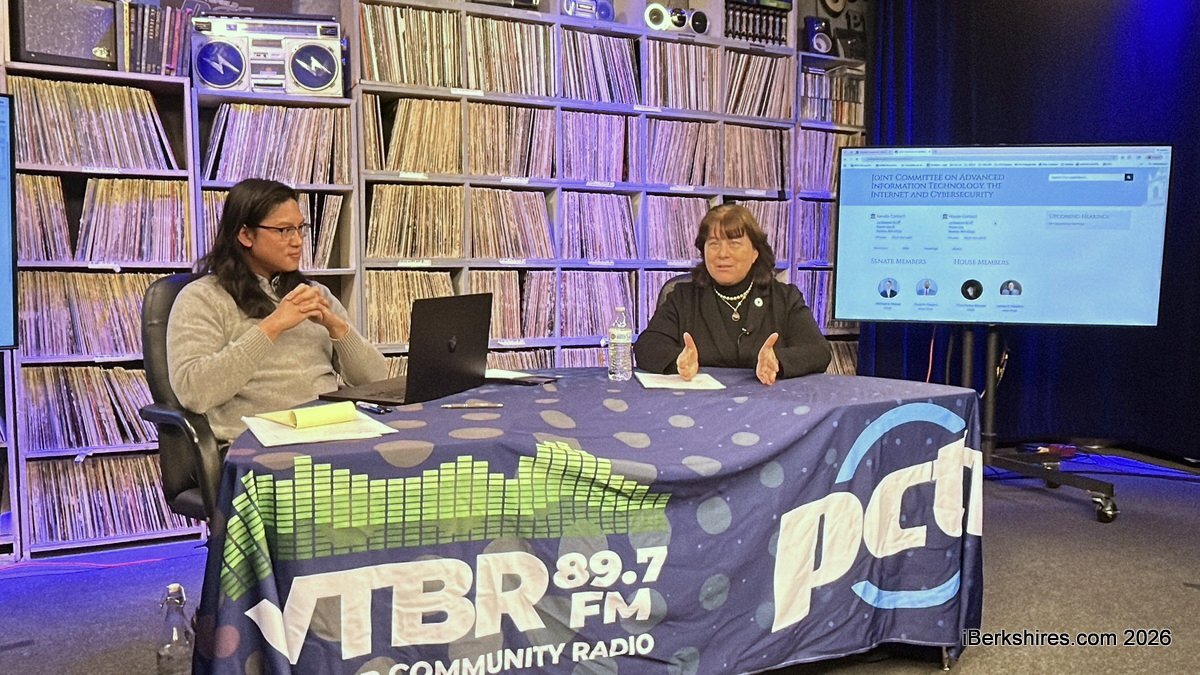 State Rep. Tricia Farley-Bouvier and Pittsfield Community Television's 'digital navigator' Samuel Pascual talk about the dangers and opportunities of artificial intelligence. State Rep. Tricia Farley-Bouvier and Pittsfield Community Television's 'digital navigator' Samuel Pascual talk about the dangers and opportunities of artificial intelligence. |
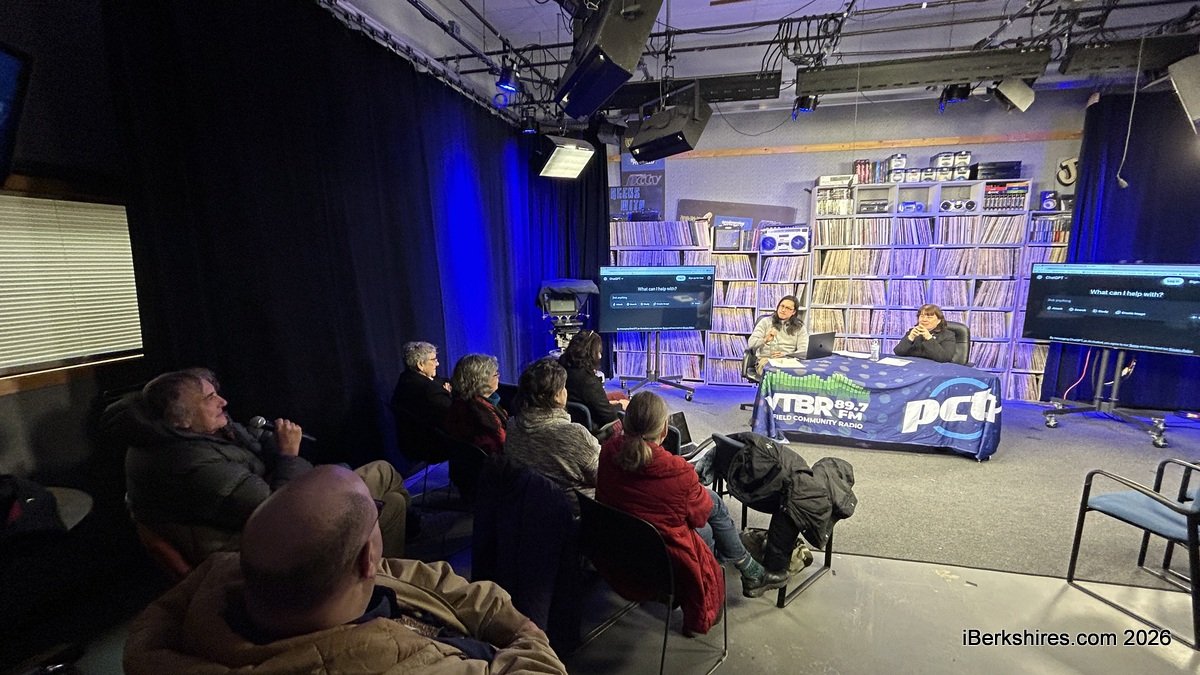
The small audience asks questions during the conversation, which will be available on PCTV.
PITTSFIELD, Mass. — Data privacy, misinformation and overreliance are among the top concerns over artificial intelligence on Beacon Hill.
State Rep. Tricia Farley-Bouvier and Pittsfield Community Television's "digital navigator" Samuel Pascual led a conversation about AI awareness last week.
Farley-Bouvier chairs the Joint Committee on Advanced Information Technology, the Internet, and Cybersecurity, and Pascual helps to ensure people are not left behind in the digital era.
A common concern when it comes to the fast emergence of artificial intelligence is where all of that consumer data goes and how it is used.
"Data privacy is the underpinning of all technology regulation," Farley-Bouvier said during the talk filmed in Pittsfield Community Television's studio.
Massachusetts does not have a data privacy law, and the committee, also known as AITIC, is working on a comprehensive bill to protect residents' sensitive information. It includes data minimization, which means companies can only collect necessary information for the product they are providing, and not precise location, sexual orientation, or pregnancy status.
Farley-Bouvier explained that the more you know about data privacy, the more paranoid you become.
"We all need to be concerned about how our data is being collected, how it is being processed, how it's being bought and sold, and manipulating our lives," she said.
"That's a pretty serious thing that I've said, but it's really true. This is, in its heart, consumer protection."
Pascual, whose position at PCTV is focused on digital inclusion through classes, events, and connecting organizations, said AI awareness is important to make sure people don't get left behind.
"People, I'm sure, are feeling like AI is moving very quickly, and this is our opportunity to kind of get caught up and enter the conversation," he explained.
Over the past year, several organizations, schools, and adult learning centers have asked for AI classes. Pascual feels people need to start talking more and differentiating what is in front of them, how legislation can be passed, and how people's voices can be included in the future.
He spoke about AI's "machine learning" that works off billions of data points, and he and the state representative agreed that companies must be accountable for the information they collect.
Farley-Bouvier is not alarmed by AI, but she is concerned, especially about it taking away jobs. She stressed the importance of using AI as a tool for students and professionals, not a substitute, and fact-checking its work.
"Because whether you're a student or a lawyer or a doctor or whatever you are, your name is the thing that goes at the bottom of that, and you're responsible for the outcome," she said.
"Companion bots" are another concern for children and adults, and Farley-Bouvier said they are difficult to regulate because of the First Amendment. What can be done is requiring periodic disclosures that the person is having a computer-generated conversation and safety risk assessments from companies, she reported.
The two also discussed AI data centers, which have drawn nationwide concerns over electricity and water use, AI "deep fakes" that mislead people on the internet, and more.
The Massachusetts House took up legislation out of Ways and Means last week, initially drafted by Farley-Bouvier, which put limits and disclosure rules on the use of artificial intelligence in elections.
This follows a fake radio ad with the AI-generated voice of Gov. Maura Healey that was posted this month by Brian Shortsleeve, a Republican candidate for governor. Shortsleeve's campaign said the ad was a "parody."
“As artificial intelligence continues to reshape our economy and many aspects of our daily lives, lawmakers have a responsibility to ensure that AI does not further the spread of misinformation in our politics," said House Speaker Ron Mariano and House Ways and Means Chair Aaron Michlewitz in a statement.
"When we do sensible regulations and have honest conversations about [AI], it's going to be better," Farley-Bouvier said.
|